The short version
- A veneer is a thin shell bonded to the front of a tooth, usually porcelain.
- It changes the size, color, length and shape of the tooth it covers.
- About half a millimeter of enamel comes off, and the veneer replaces it.
- It fixes chips, gaps, staining and uneven edges. It does not move teeth.
- It is cosmetic. It does not treat decay and it does not protect the tooth.
- Thickness
- About 0.5 mm
- Appointments
- Two, plus a check
- Made by
- A ceramist, per patient
- Anesthetic
- Available
A dental veneer is a thin shell, usually porcelain, bonded to the front of a tooth. It resets that tooth’s size, color, length and shape in one step. Fitted well, it is not distinguishable from the teeth around it.
That is the whole idea. Everything below is what follows from it.
What a veneer covers
Chipped and broken edges. An injury or a hard piece of food leaves an edge the eye goes straight to. A veneer restores the original shape.
Gaps. Wide natural spacing between the front teeth closes without moving anything. The teeth stay where they are; the shells are made slightly wider.
Staining that will not lift. Coffee, tea and red wine stain enamel, and some discoloration is structural rather than surface. Porcelain does not stain at all, which is why it answers the cases whitening cannot.
Uneven length and shape. Teeth of different lengths read as worn or careless even when each one is healthy. Veneers make a set uniform and proportioned.
Crooked teeth, with a caveat. The teeth are not straightened. The gaps and edges that make them read as crooked are filled and evened out. For a cosmetic complaint that is usually what was wanted; where the bite itself is affected, orthodontics is the treatment and veneers come afterwards if at all.
What a veneer will not do
- It does not move a tooth.
- It does not rebuild a tooth. A cracked or heavily filled tooth needs a crown, which encases the whole tooth and carries the bite load.
- It does not treat decay or gum disease, and it does not slow either one down.
- It does not protect the tooth underneath.
That last pair matter more than they sound. A veneer placed over an untreated problem conceals it, and concealed problems get found later and cost more.
How the tooth is prepared
Most cases need very little. About half a millimeter of outer enamel comes off the front surface so the veneer sits flush rather than proud.
The enamel removed is replaced by the veneer itself, which is why a finished veneered tooth is not bulkier than its neighbors. It is also why the procedure is irreversible: that half-millimeter does not come back.
What fitting involves
- Consultation. What bothers you, what is achievable, and whether veneers are the right treatment at all. Cosmetic imaging projects the likely result before you commit.
- Preparation and impression. The enamel is reduced, the teeth are shaped where needed, and an impression goes to the ceramist. About two weeks in the lab; temporaries in the meantime.
- Fitting. The veneers are tried in before anything is bonded, checked for shape and shade, and trimmed if needed. The teeth are etched so the bond grips, the adhesive is cured, and the edges are polished.
- A check about a week later, to confirm the gums have settled and the bite is comfortable.
The full sequence is in what happens at a veneer appointment.
Living with them
Veneers are brushed and flossed like natural teeth, twice a day, with particular attention to the margin where veneer meets tooth.
Two habits do most of the protecting: a night guard if you grind, and treating your front teeth as teeth rather than as tools. How long each material lasts, and what shortens it, is in how long veneers last.
Whether they are right for you
Sometimes they are not, and a good consultation says so. Whitening is cheaper and simpler when color is the only complaint. A crown is the correct treatment where a tooth is structurally compromised rather than cosmetically flawed.
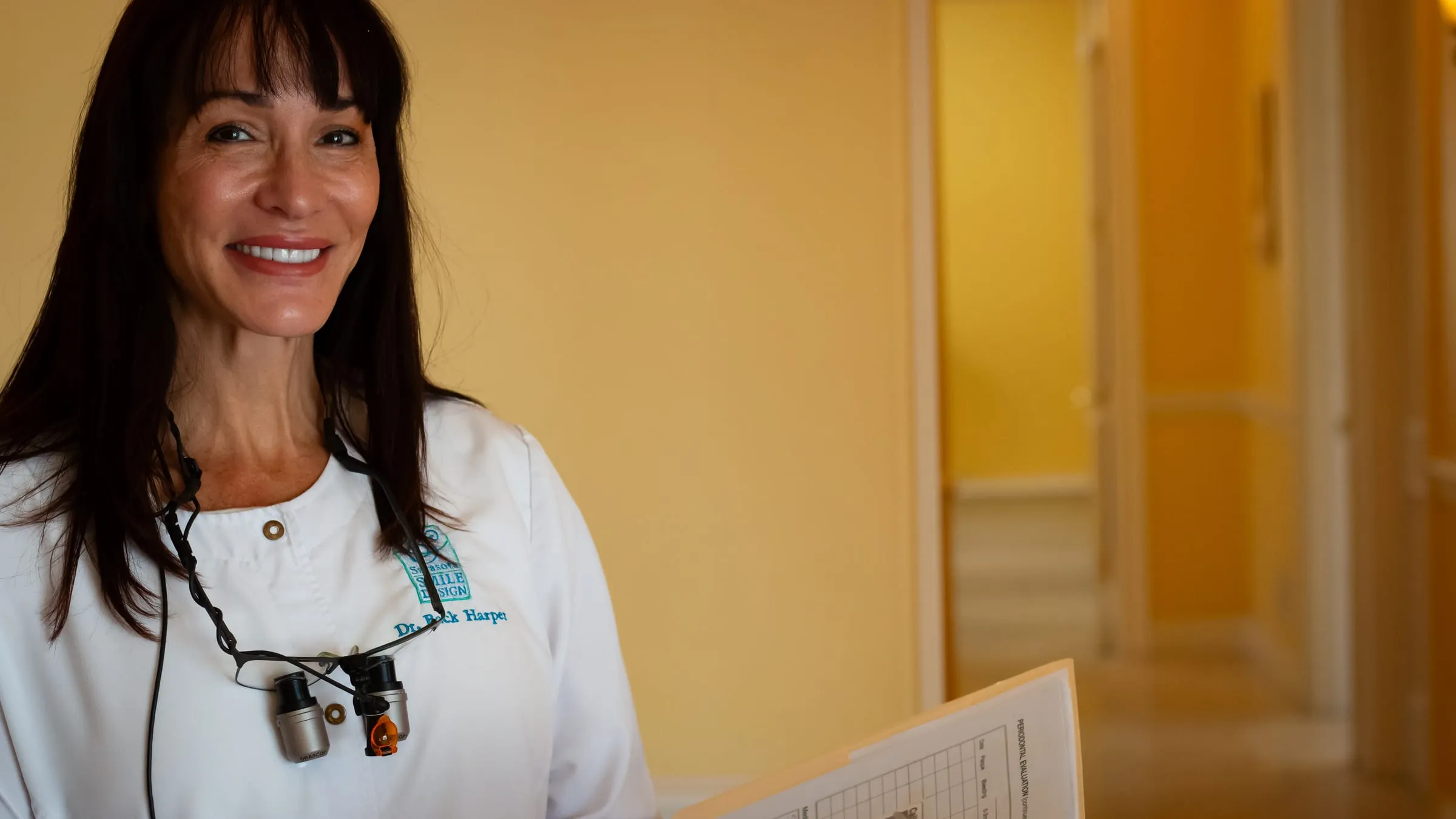
Dr. Back examines the teeth, the gums and the bite before recommending anything. The practice is on Clark Road in Sarasota, convenient to Nokomis, Osprey and Venice, open Monday to Thursday.
Call 941-927-5411, or see porcelain veneers.