The short version
- The appointment takes about an hour. The gel is on for roughly fifty of those minutes.
- A barrier protects the gums. That is the main thing a kit cannot do.
- Crowns and fillings do not change shade. Everything around them does.
- Brown and gray staining responds poorly. Yellow responds best.
- Results last a year or more, depending on what you drink.
- Appointment
- About 1 hour
- Gel on
- About 50 minutes
- Result
- Same day
- Lasts
- A year or more
Teeth darken with diet, age, medication and genetics. In-office whitening reverses the part of that which is stain, in a single appointment, with the result visible when you stand up.
What the appointment involves
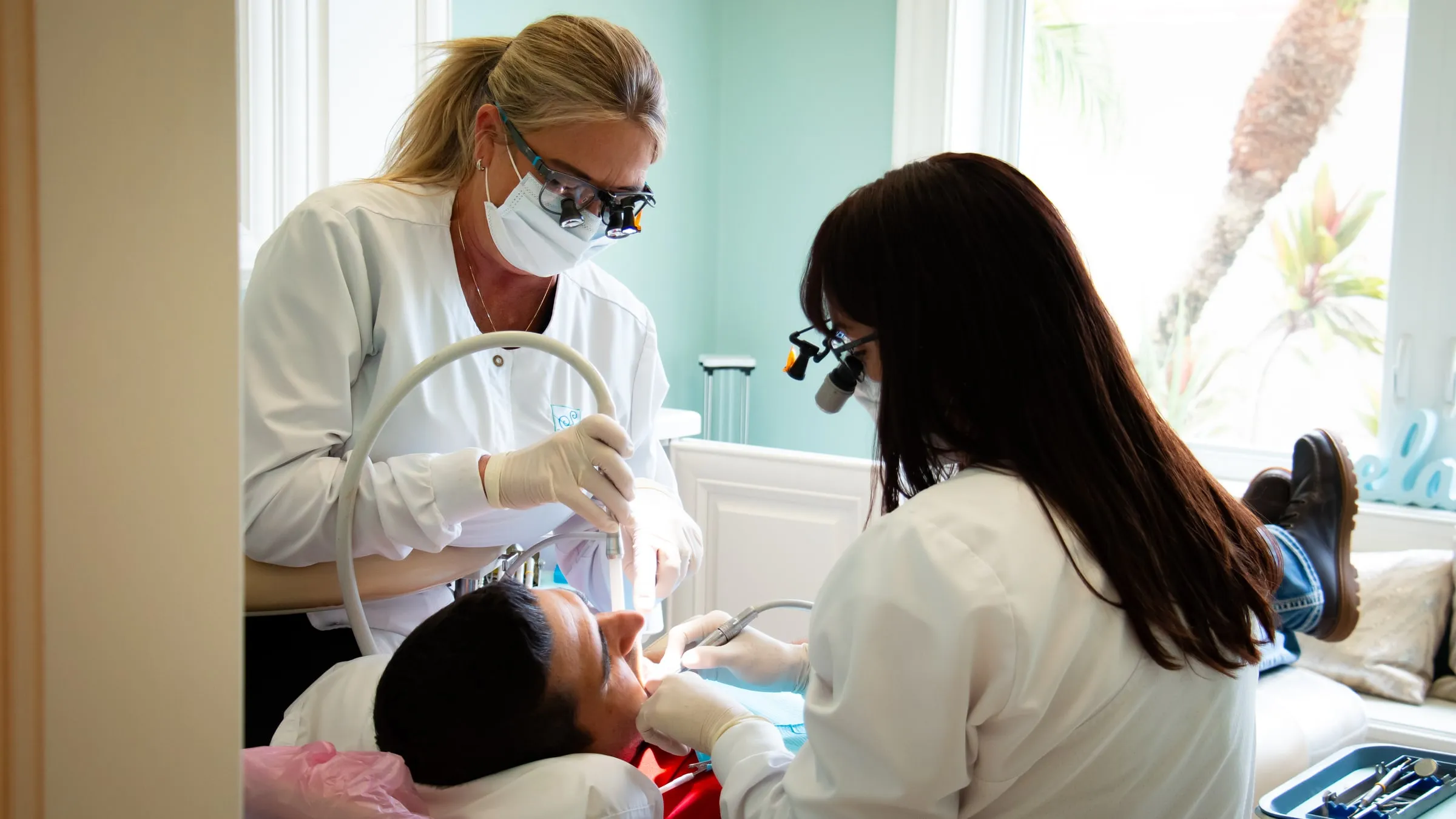
It takes about an hour.
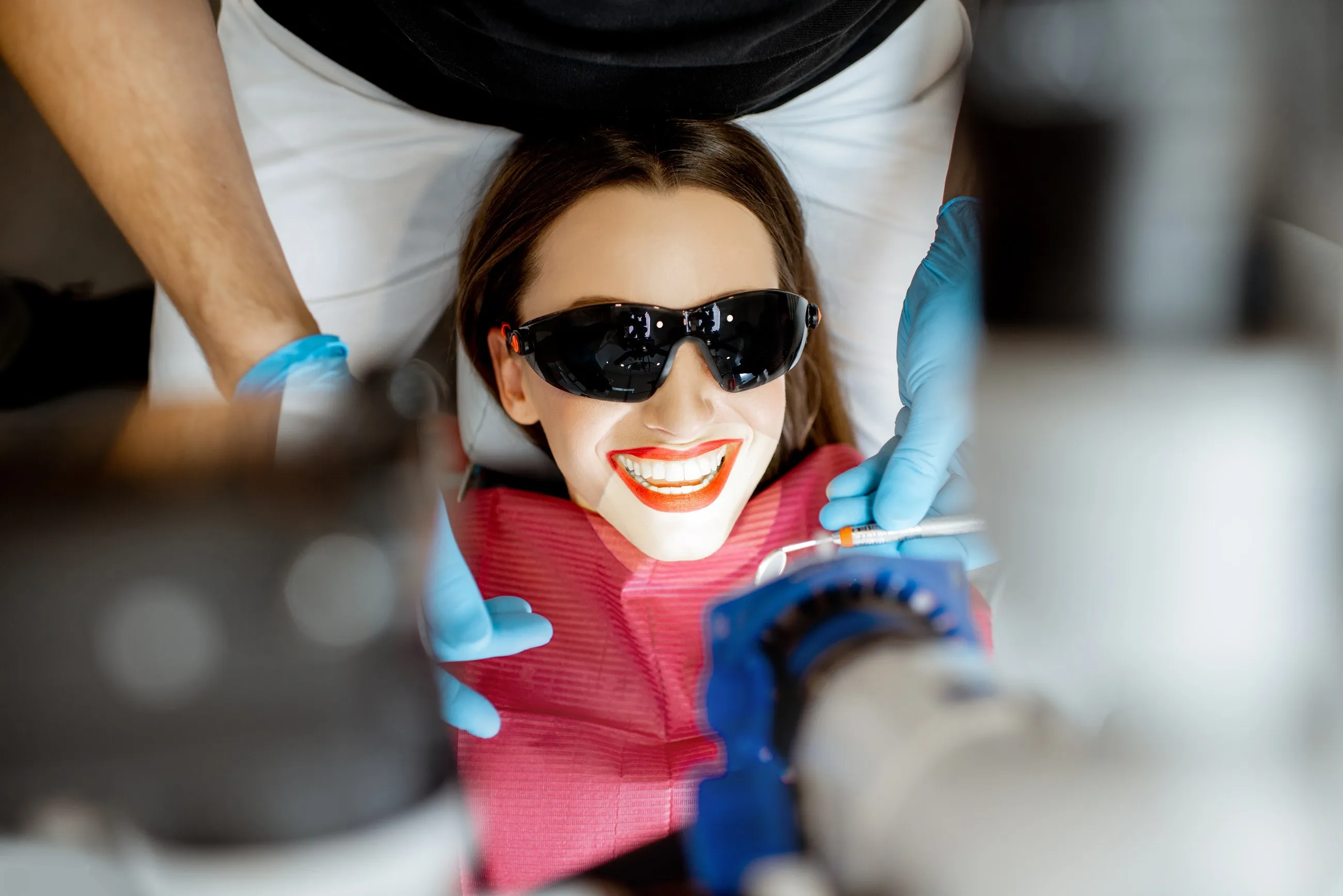
A barrier goes around the gums first, so the whitening gel touches only the teeth. This is the main thing a dental office does that a home kit cannot. The gel is applied and left for roughly fifty minutes, then rinsed off and the barrier removed.
There is no waiting period afterwards. The change is visible the same day.
What whitening actually does
The active agents are hydrogen peroxide and carbamide peroxide. They break down stain that has accumulated on and within the enamel, so the color becomes less concentrated and less apparent.
That is the entire mechanism, and it explains every limit below. Whitening lifts stain. It does not change the underlying color of a tooth, and it does nothing at all to material that is not enamel.
What it will not lift
Four cases, and they matter because a patient expecting otherwise will be disappointed by a treatment that worked exactly as designed.
| Responds to whitening | |
|---|---|
| Yellow staining from food, drink, tobacco | Well |
| Brown and gray discoloration | Poorly |
| Crowns, veneers, fillings | Not at all |
| Teeth discolored by trauma or medication | Generally not |
The restorations point deserves emphasis. If you have tooth-colored crowns or fillings on the teeth that show when you smile, whitening will lighten everything around them and leave them at their original shade. The result can look worse than the starting point, and it is not reversible in the short term.
This is why the examination comes before the appointment rather than at it.
How long it lasts
A year or more, depending on how the teeth are cared for and what you drink. Whitening does not stop new stain forming; coffee and red wine work on whitened enamel exactly as they did before.
At-home products supplied by the practice handle touch-ups between appointments. Maintenance is part of the treatment, not evidence that it failed.
The first 48 hours matter most. Enamel is more porous straight after treatment, so that is the window in which a fresh result is easiest to compromise.
Why professional rather than a kit
Some whitening products sold direct can damage teeth, and there is no reliable way for a buyer to tell which are safe from the packaging.
A dental office adds two things a kit cannot:
- A physical barrier over the gums, so the agent goes where it is meant to and nowhere else.
- Someone watching how your teeth respond, who can adjust or stop. For a patient who is already sensitive, that is the entire argument.
Side effects
In most cases there are none. Occasionally there is sensitivity or soft tissue irritation in the first 24 hours, which usually settles within a day. If it continues beyond that, call the practice.
When whitening is the wrong treatment
If the complaint is the shape of the teeth rather than the color, whitening will not address it. Gaps, chips and uneven edges need a different treatment, and the comparison is in whitening or veneers.
If a white smile is the goal but health has not been checked recently, start there instead. Color tells you nothing about decay or gum disease: white teeth and healthy teeth.
Booking
Sarasota Smile Design is on Clark Road in Sarasota, a short drive from Nokomis, Osprey, Venice and Siesta Key. Open Monday to Thursday, 8am to 4pm.
Call 941-927-5411, or see teeth whitening.