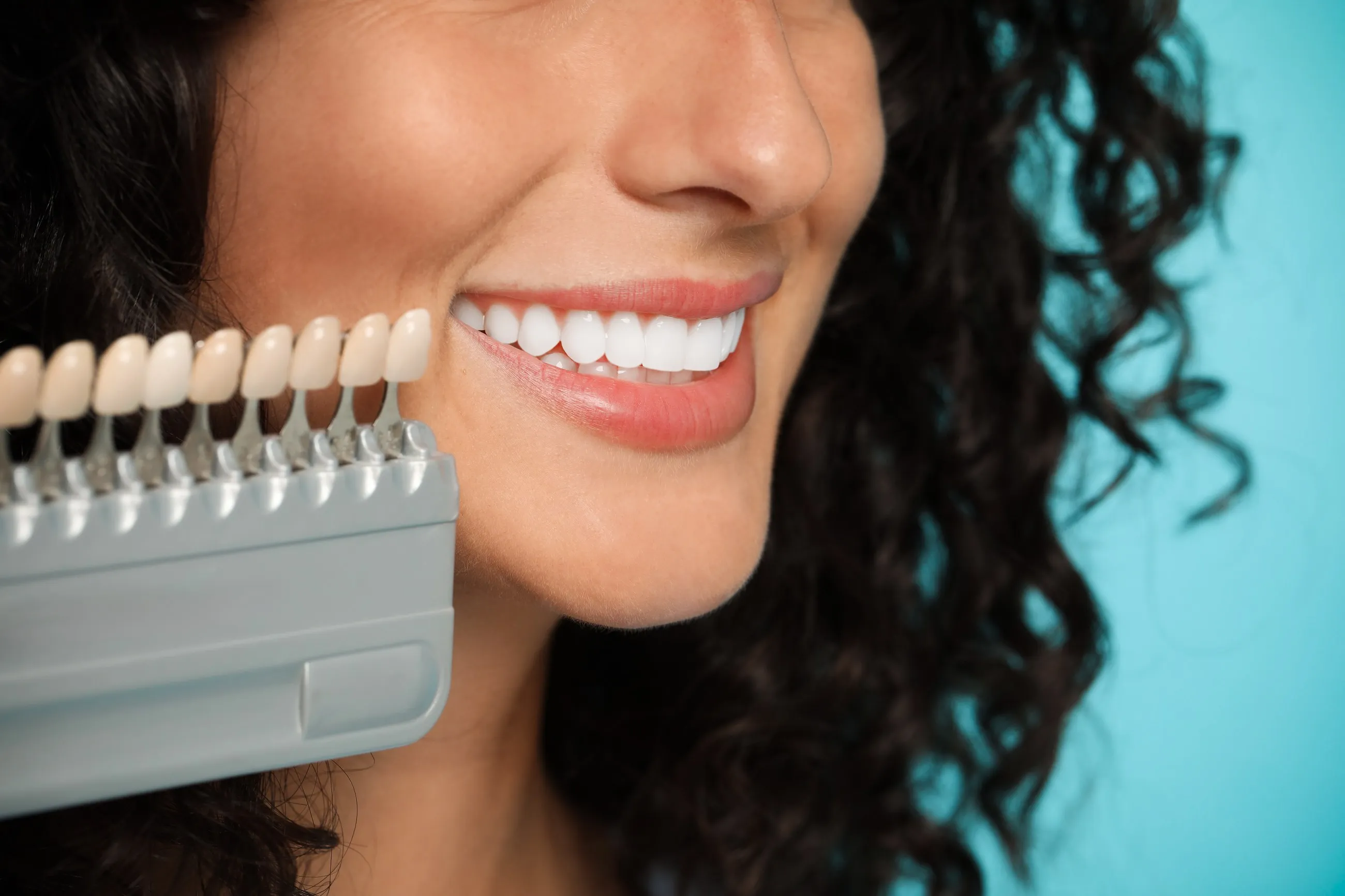
The short version
- A veneer changes a tooth's size, color, length and shape. It does not move it.
- Porcelain does not stain. Composite does.
- Veneers do not cause cavities and do not prevent them either.
- Cost depends on material, number of teeth and who does the work.
- Whitening, bonding or a crown is sometimes the better answer.
- Usual material
- Porcelain
- Stains
- Composite only
- Protects the tooth
- No
- Reversible
- No
The questions patients ask most, answered without hedging. The accordion below covers each one; what follows here is the context behind the short answers.
Color is the easy part. Shape is the reason people choose veneers
Whitening lifts stain from enamel and does nothing else. It cannot close a gap, lengthen a worn edge or even out a tooth that sits slightly behind its neighbor.
A veneer resets color and shape at the same time, which is why cases with more than one complaint end up here. If color is genuinely the only issue and your teeth are well shaped, whitening is cheaper and simpler and you should have that instead. See whitening or veneers.
Porcelain, composite and the alternatives
Porcelain is the usual material. It resists staining and handles light the way enamel does, because a ceramist builds it in layers.
Composite is shaped on the tooth in one visit, costs less, and takes up stain over time.
Neither, in two situations. A single small chip is often better handled with simple bonding. A tooth that is cracked through, heavily filled or broken below the visible surface needs a crown, which encases the whole tooth and carries bite load. A veneer on a tooth that needed a crown is a repair that fails after you have paid for it.
The material comparison is in porcelain and composite veneers compared.
What veneers do not do
Three things, and they are the ones that cause disappointment when nobody says them out loud.
- They do not protect the tooth. Porcelain does not decay. The tooth bonded to it decays on exactly the same terms as before, and the margin where the two meet is a place decay can start if it is not cleaned.
- They do not move teeth. Genuinely crowded teeth or an affected bite is orthodontics. Veneers change the surfaces the eye reads.
- They do not come off cleanly. About half a millimeter of enamel is removed to make room, and it does not grow back.
What decides the price
Material, number of teeth, and the hands doing the work, in that order of variability.
There is a real difference between a case placed by someone who does this regularly, with a ceramist they have worked with for years, and one placed occasionally. It shows in whether the result looks like teeth or like dental work, and it is the part worth paying for.
Because the number of teeth and the amount of preparation vary so much between cases, any figure quoted before someone has looked at your mouth is close to meaningless. Call the practice and book a consultation instead.
Where the practice is
Sarasota Smile Design is on Clark Road in Sarasota, convenient to Nokomis, Osprey, Venice and Siesta Key, open Monday to Thursday, 8am to 4pm.
Call 941-927-5411, or see porcelain veneers.